

When you think of the overall measure of good health, you may think about the number of years you will live. However, more doctors recognize that lifespan doesn’t account for the number of healthy years you live, or your healthspan. It’s becoming an increasingly critical marker of health, and it translates into better quality of life and lower medical costs because you spend fewer years at the end of life in poor health.
“Muscle health is having a moment,” Dr. Claudia Pastorelli Mosca, an OB-GYN and medical advisor to Flo Health, a women’s health app that recently released a study by the Mayo Clinic on perimenopause, tells Flow Space. “Strong muscles help you feel steady and capable in daily life: carrying bags, climbing stairs, protecting your joints, staying balanced, and maintaining independence as you age.”
Whereas women were once told to get smaller, today’s health experts are championing getting stronger.
“Muscle span becomes a helpful reframe: instead of focusing on weight or appearance, it focuses on function over decades [and] how long your muscles stay strong enough to support the life you want,” says Mosca. “The empowering part is that muscle health is very modifiable.”
What is muscle span, and how is it measured?
Muscle span is not a standard scientific term, and there is no one-size-fits-all test. But it usually refers to overall muscle health and strength. One metric is the percentage of lean muscle in your body, assessed by body composition tests such as DEXA scans. Experts tell Flow Space that weight and BMI alone are not as strong indicators of health as once thought. By contrast, body composition tests assess the body’s proportions of fat and muscle.
Alongside body composition tests, experts also recommend strength tests, such as grip strength, as markers of muscle health. Grip strength can be measured using a handheld dynamometer. One study found that for every five-kilogram decrease in grip strength, all-cause mortality increases by 16%.
Dr. Annu Navani, a California-based physician specializing in spine, orthopedics, and musculoskeletal conditions, and the chief medical officer at Le Reve Regenerative & Longevity Care, says the sit-to-stand test is a useful measure of muscle endurance by assessing lower-body power. There are also muscle quality tests being developed in clinical trial settings, Navani says, to provide deeper insights into human muscle function.
Beyond clear-cut stats, you can gauge your muscle health by documenting your walking speed or stair-climbing level, giving yourself a baseline to improve upon, says Dr. Francesco Callipari, an OB-GYN and the medical director for the Carolyn Rowan Center for Women’s Health and Wellness at Mount Sinai, which opens this spring with a particular emphasis on treating midlife women.
Mosca also recommends a simple “muscle span mindset” that includes asking: “Are you getting more capable over time? Are stairs easier? Are you steadier? Are you lifting a little more, doing an extra rep, or recovering better?”
Muscle health and midlife health
Midlife is a critical window for women to optimize their muscle health.
Women experience age-related muscle loss when they reach midlife, with menopause and perimenopause also making weight gain more common. As women enter perimenopause, they are at a higher risk for bone loss, which can lead to osteoporosis. It’s even more critical for those in this cohort to combat both muscle and bone loss with strength training that improves muscle and long-term health.
“Even when weight changes are modest, body composition can shift in ways that matter for long-term metabolic health,” says Mosca.
When the estrogen hormone declines during perimenopause, the body’s insulin sensitivity decreases, too, which affects overall metabolism. Without prioritizing muscle health that helps combat the metabolic effects of lower estrogen, women are more prone to metabolic dysfunction.
Navani calls skeletal muscle the “primary metabolic engine.” The good news is that understanding the mechanisms behind perimenopause and the power of muscle can help women take their health into their own hands.
“Many women feel like they’re doing everything ‘right,’ but their body feels softer, weaker, more tired, and harder to maintain,” Dr. Vanessa Coppola, a nurse practitioner with specialized certification in menopause and midlife women’s health, and the founder of Bare Aesthetic and Bare Soul Wellness, tells Flow Space. “Muscle span reframes that experience as physiology, not failure, and gives women a clear, evidence-based path forward.”
How to improve your muscle span
It’s not just about cardio. The most common misconception about midlife women’s muscle health is the “toning myth,” Navani says — that high-repetition, low-weight reps are the best way to build strength without becoming bulky.
“This perspective fails to account for the biological reality of anabolic resistance, a phenomenon exacerbated by the perimenopausal decline in estrogen, whereby skeletal muscle becomes less responsive to traditional growth signals,” she says.
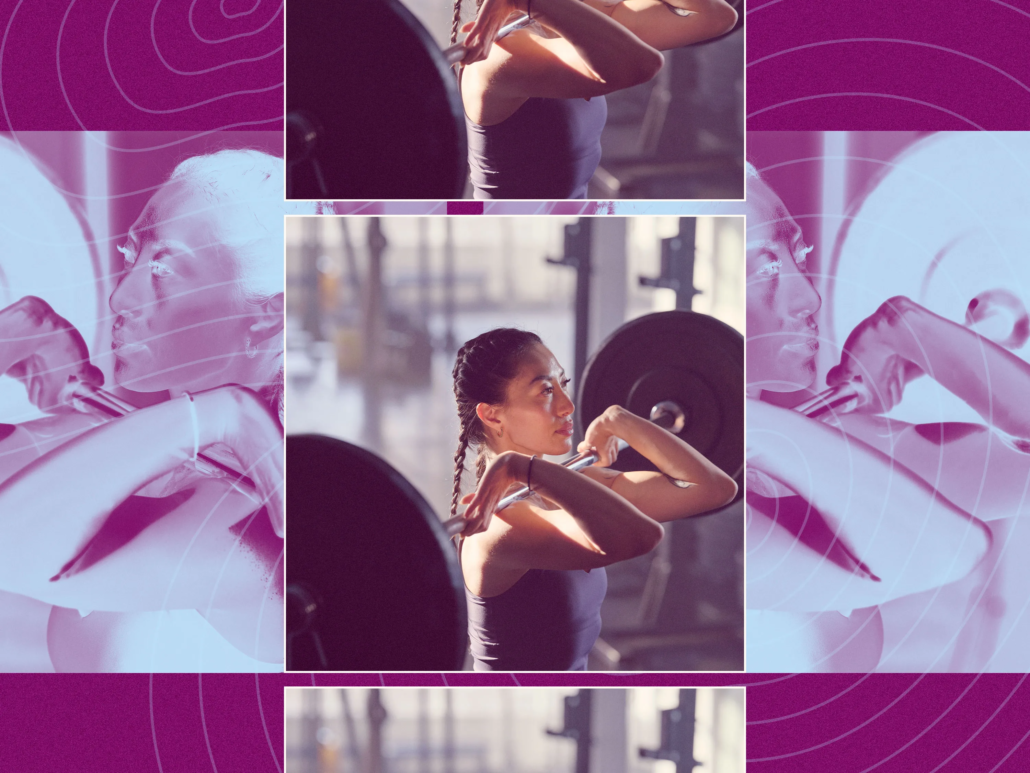
National guidelines recommend at least two days of strength training per week, which may include resistance bands and weightlifting. “One major misconception is that cardiovascular exercise alone is sufficient, and that resistance training is optional,” Callipari from Mount Sinai says. “Another is the belief that building muscle is primarily about aesthetics or achieving a certain look.”
You can spend one day per week focused on the lower body with goblet squats, Romanian deadlifts, and box step-ups, and one on upper-body day that includes overhead presses and rows, Navani says. There’s also a muscle-brain benefit to weight training.
“Engaging in coordination-intensive movements, such as single-leg deadlifts or agility drills, strengthens the neuromuscular junction, ensuring that our brain can rapidly recruit muscle fibers, which is the primary defense against falls in later decades,” Navani says. Still, pairing strength training with cardio, which is integral to cardiovascular health, can deliver the best return on investment for women.
To uphold the effort made at the gym, it’s critical to fuel properly. Having enough protein and fiber is essential for maintaining strength. Dr. Amy Shah, a board-certified physician and nutrition specialist, recommends the 30-30-3 approach: 30 grams of protein at breakfast, 30 grams of fiber throughout the day, and three probiotics.
“We now understand that supporting bone health requires far more than calcium and vitamin D. Resistance exercise, adequate protein intake, and overall nutritional optimization are essential,” Callipari says.
Further, sleeping at least seven hours per night is critical for “recovery, repair, and overall metabolic health,” Callipari says.
Callipari also hopes to encourage women that it’s not too late to start
“Women can build strength at any age,” she says. “Don’t feel overwhelmed. Start from wherever you are and build gradually. Small, consistent steps accumulate into meaningful change, and the goal is progress — not perfection.”


