
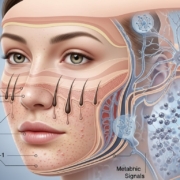
The dermatological community confirms a significant and concerning trend: the rise of persistent and late-onset acne vulgaris in adults, particularly in high-SDI regions like the U.S. Up to 25% of women in their 40s now report active acne.

Why the Surge? The Two Core Triggers

The persistence of adult acne is a manifestation of two systemic dysfunctions:

  1. Chronic Stress and the Neuroendocrine Axis: Sustained psychological stress elevates cortisol, which directly stimulates the adrenal glands to produce more androgens. This hormonal signal increases sebaceous gland activity, leading to excessive oil production and inflammation, a process routed through the Hypothalamic-Pituitary-Adrenal (HPA) axis.
  2. Metabolic Dysfunction: Modern diets high in refined carbohydrates and high-glycemic loads drive elevated Insulin and IGF-1 (Insulin-like Growth Factor 1) levels. IGF-1 is a potent sebum-stimulating factor and a keratinocyte growth factor, linking diet-driven metabolic stress directly to acne pathogenesis. Underlying hormonal conditions like PCOS frequently exacerbate this.

Scientific Solutions: The Multi-Modal Strategy

Effective management targets both the surface pathology and the systemic triggers:

  • Topical Foundation: Use Retinoids (e.g., Adapalene) to normalize follicular cell turnover and Benzoyl Peroxide (BPO) to reduce the C. acnes bacteria and combat inflammation.
  • Systemic Intervention: For hormonally-driven acne (typically lower-face), Oral Anti-Androgens (like Spironolactone) or specific Combined Oral Contraceptives are used to reduce circulating androgen effects on the sebaceous gland.
  • Lifestyle Modulation: Rigorous stress management and adherence to a low-glycemic index diet are essential to dampen HPA and IGF-1 signaling, turning off the systemic triggers.

For severe, treatment-resistant cases, a course of Oral Isotretinoin remains the only intervention with the potential to offer permanent, long-term remission by irreversibly shrinking the sebaceous glands.


The American Association of Clinical Endocrinology (AACE) 2025 consensus statement outlines a fundamental shift in obesity care, moving the focus from weight reduction alone to the comprehensive management of weight-related complications.

Full article at: https://pubmed.ncbi.nlm.nih.gov/40956256/

Key Takeaways

New Nomenclature and Definition:

The consensus recommends using the term Adiposity-Based Chronic Condition (ABCC) (or Adiposity-Based Chronic Disease, ABCD) to replace or supplement “obesity.” This change recognizes that excess or dysfunctional body fat is a complex, chronic, progressive, and relapsing disease that requires lifelong management, similar to hypertension or diabetes.

Complication-Centric Staging:

Diagnosis and treatment intensity must be based on a patient’s clinical complications (e.g., Type 2 diabetes, heart disease, sleep apnea) rather than relying solely on Body Mass Index (BMI). BMI remains a useful screening tool, but the severity of ABCC is staged by assessing the associated health risks. This shifts the goal from a number on the scale to the reversal or prevention of disease burden.

Prioritization of New Pharmacotherapies:

The guidelines introduce a hierarchy for pharmacological therapies, strongly recommending the use of newer, more potent second-generation weight-loss medications (e.g., GLP-1 and dual agonists) that have demonstrated 10-15% of total body weight loss in clinical trials. This level of weight reduction is often necessary to achieve remission or significant improvement in ABCCs. Medications are prioritized based on their proven efficacy in specific co-existing conditions.

Integration of Psychosocial Care:

AACE emphasizes a comprehensive and compassionate care model that directly addresses weight stigma, internalized weight bias (IWB), and psychological factors (e.g., anxiety, depression, disordered eating). Clinicians are advised to provide person-centered, nonjudgmental care that also considers social determinants of health.

Lifestyle as Foundation:

While pharmacotherapy and bariatric surgery are essential tools, intensive lifestyle intervention remains the foundation of long-term success. This includes:

  • Nutrition: Emphasis on high-protein, nutrient-dense diets.
  • Physical Activity: Combining aerobic and resistance training (targeting 150–300 minutes per week) for sustained weight management.

Dr. Annu Navani stands at the forefront of innovation in clinical Orthobiologics and Longevity medicine. A triple-board certified physician in Anesthesiology, Pain Medicine, and Regenerative Medicine, she has earned national recognition as a pioneer who is shaping the future of precision spine, joint, musculoskeletal care and age-defying therapies.

Dr. Navani serves as the Founder and CEO of  www.lerevewellness.com, a premier clinic based in Silicon Valley, which merges cutting-edge science with personalized care to optimize healthspan. Her practice spans advanced biologics, PRP and Mesenchymal stem cell therapy, and cellular-level diagnostics—offering patients an integrated approach to mobility, wellness and longevity.

One of Dr. Navani’s most notable contributions is her leadership in establishing the first-ever clinical guidelines for Orthobiologic use in Spine, helping set a national benchmark for the ethical and evidence-based application of biologics like platelet-rich plasma (PRP) and mesenchymal stem cells (MSCs) in spine interventions. These guidelines are now a key reference for physicians navigating the complex and rapidly evolving field of regenerative spine medicine.

In addition to policy leadership, Dr. Navani was the Principal Investigator of the first randomized clinical trial directly comparing PRP versus stem cells for treating intervertebral disc degeneration—a bold and critical effort to address a major cause of chronic low back pain with scientific clarity. The trial’s outcomes are anticipated to help physicians and patients make more informed choices based on biologic profiles, imaging biomarkers, and regenerative potential.

Dr. Navani’s clinical and academic work has been widely published, including in peer-reviewed journals and medical textbooks. She is a frequently invited speaker at national and international conferences, where she advocates for responsible innovation and multidisciplinary collaboration in biologics, pain management, and healthy aging. Her voice is especially influential at the intersection of technology, healthcare and longevity, as she champions patient empowerment and evidence-based digital tools that allow individuals to track nutrition, pain, mobility, and wellness over time.

A respected educator and thought leader, Dr. Navani has served as an Adjunct Faculty at Stanford University for more than 20 years, mentoring the next generation of physicians and researchers. Her philosophy blends precision diagnostics, regenerative therapies, and lifestyle optimization—backed by clinical data and a human-centered ethos. Her work is a testament to what’s possible when medicine, science, and vision come together in the service of human health and wellness.

Whether she is consulting with biotech developers, leading clinical trials, or guiding her patients toward expanding healthspan, Dr. Navani remains focused on her mission: to deliver meaningful, measurable, and personalized healthcare that heals from the inside out.

To follow her journey and access exclusive wellness tips, clinical insights, and updates, connect via instagram.com/dr.annunavani, linkedin.com/in/annunavani/, or her official website www.annunavani.com.